

By Scott Bay
Kauani
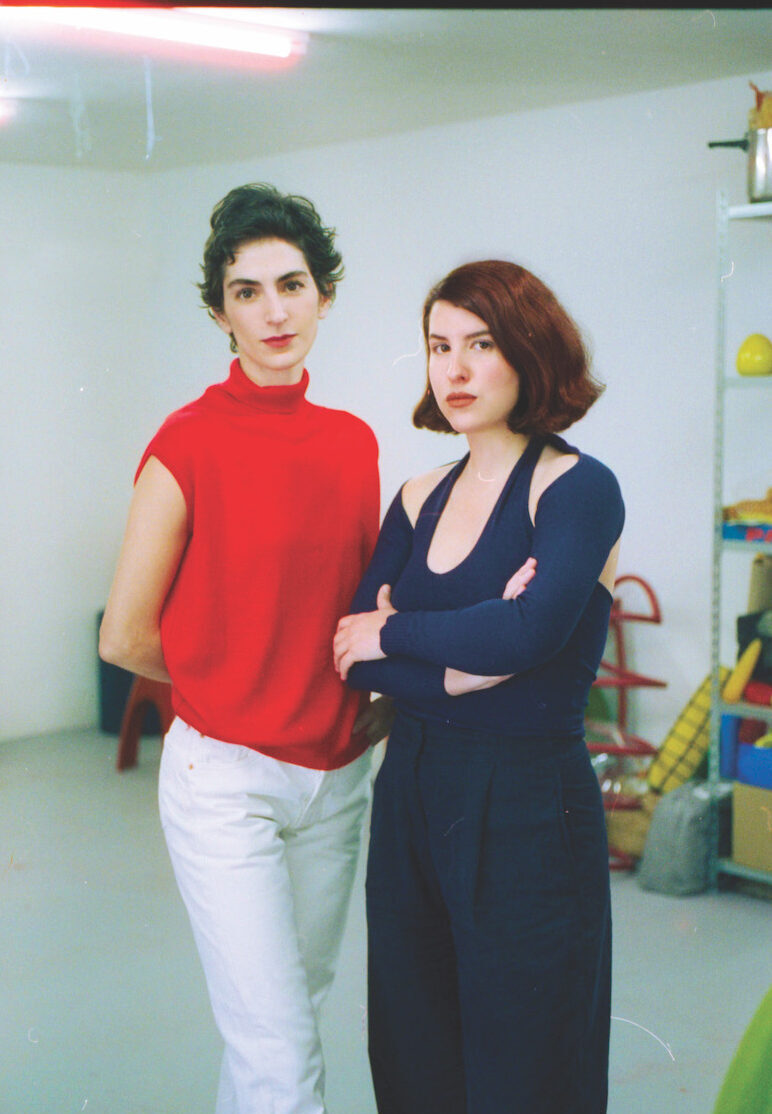
Textile designer Inés Quezada has always looked to the land for guidance. The shifting tones of desert soil, the silhouettes of cacti against twilight—each biological element guides the Mexico City–based artist’s visual and emotional palette. Together with Madrid-based designer Inés Llasera, she founded Kauani (meaning “to bloom” in Nahuatl), a studio devoted to translating the natural world into woven form. Their practice sits at the intersection of design, ecology, and cultural heritage, merging botanical inspiration with contemporary craft.
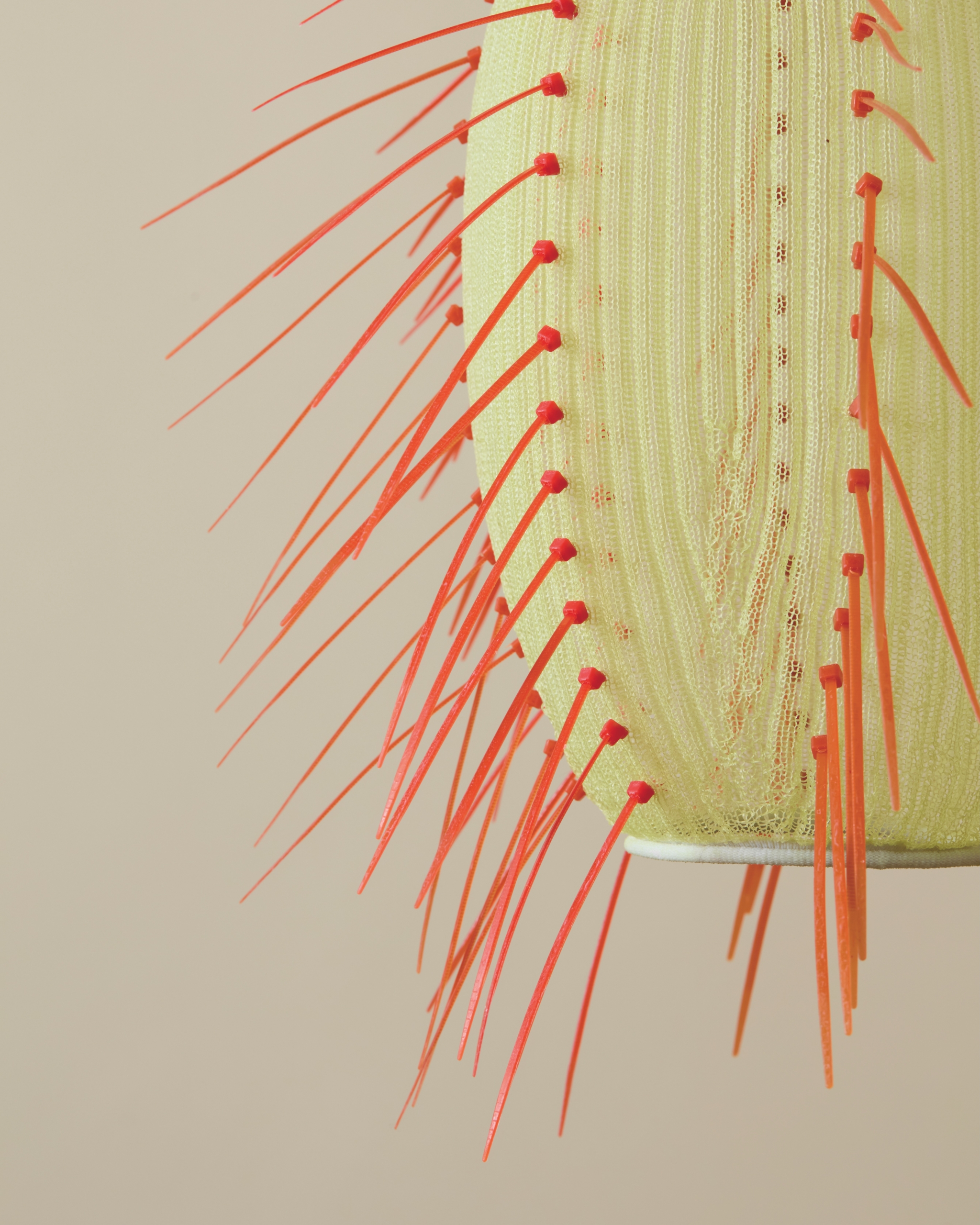
Kauani’s latest collection, Noches Áridas (Spanish for “arid nights”), emerges from an in-depth study of xerophytic plants, species that thrive in the dry, harsh landscapes of the Americas. “Cacti symbolize resilience,” Quezada says. “Adapted to extreme environments, they endure long droughts and high temperatures and develop ingenious
survival strategies.”
Blending traditional handcraft with modern technology, Quezada and Llasera reimagine those survival forms in light. Their pendants and table lamps swell like desert blooms after rain—sculptural, luminous, and full of quiet strength. “Through Noches Áridas, we’re empowered by the morphological expressions of this botanical family,” Quezada says. In their glowing contours, each piece is a reminder that beauty and endurance can flourish, even in the unlikeliest places. kauani.studio
Carla Fernández
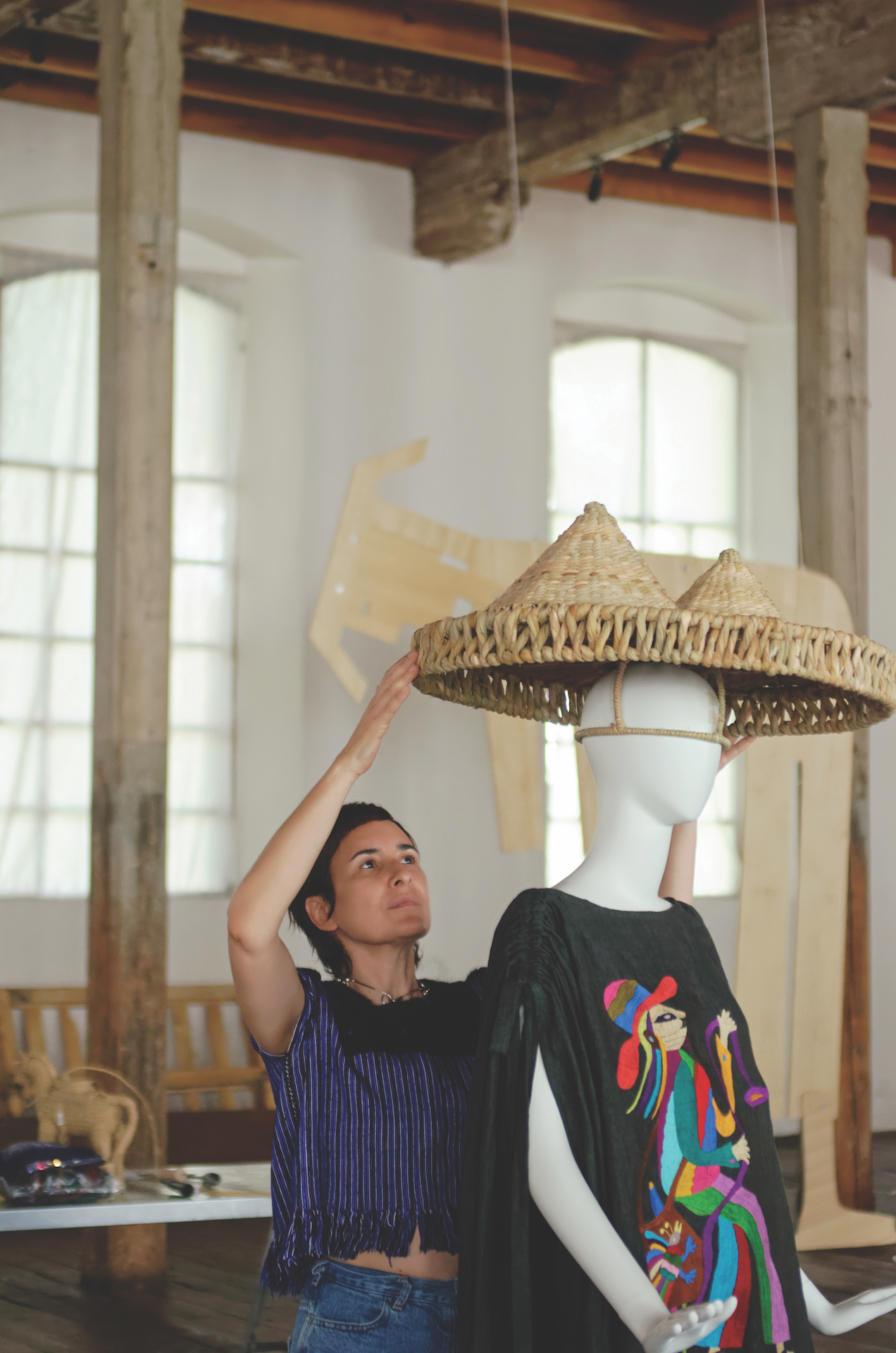
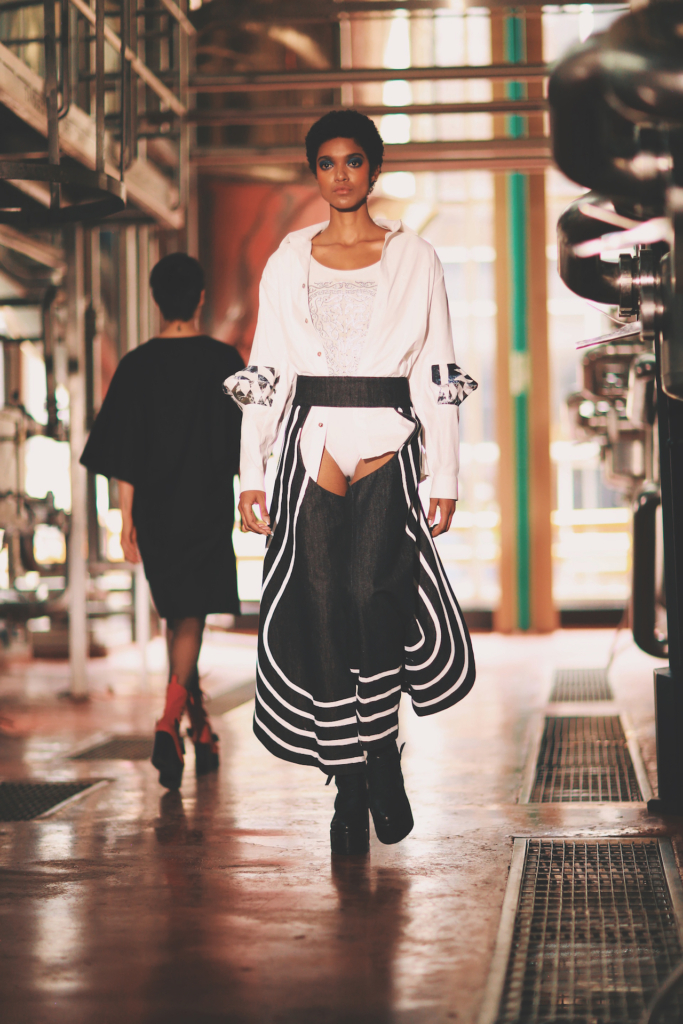
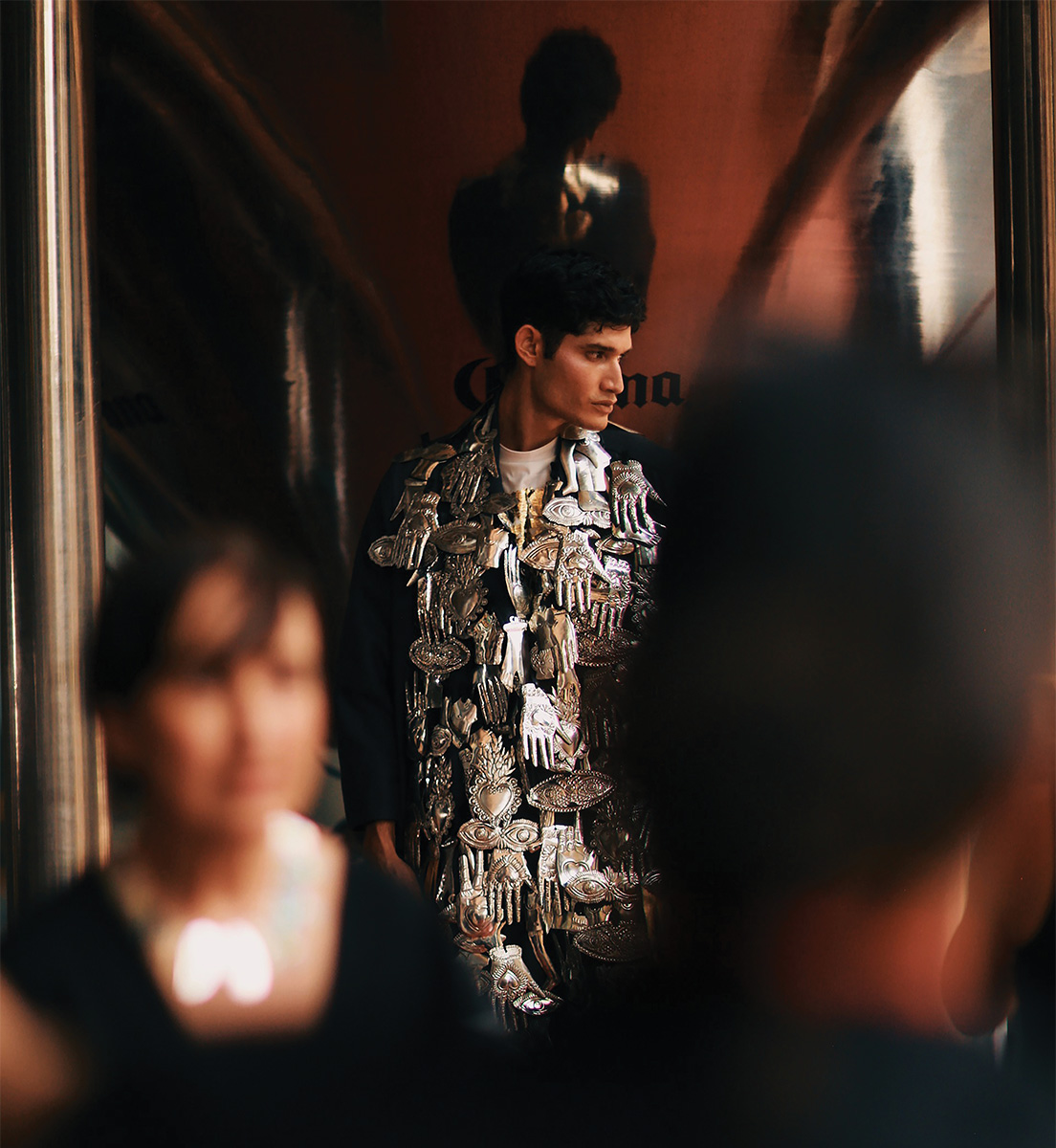
For Carla Fernández, fashion is not ephemeral, and trends are anathema to a greater mission. Expressed through her eponymous label, that mission begins with heritage: Fernández works with more than 200 artisans across Mexico, including Indigenous cooperatives in Quintana Roo and Oaxaca, to merge centuries-old Mayan and Mixtec textile techniques with contemporary silhouettes. What emerges is not just design but living culture. “Tradition is not static,” the Mexico City–based designer says. “It’s always evolving.”
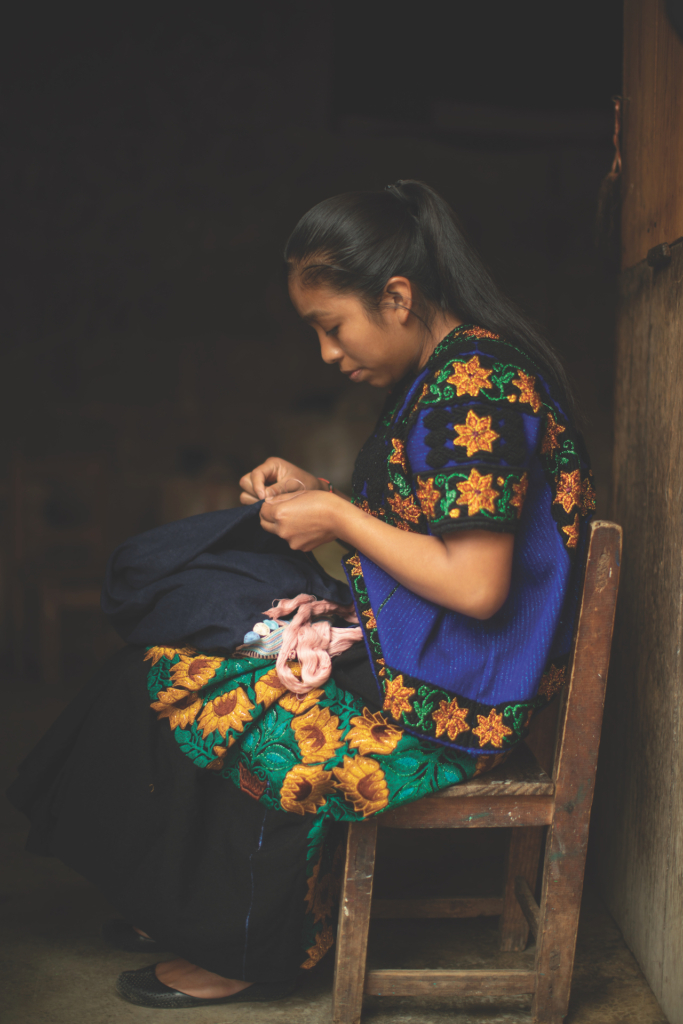
Educated as a historian, Fernández uses her textiles as a means for storytelling. For instance, her 2023 collection, Work Clothes, demonstrates the pride her people have long taken in their work, donning their most embellished and intricate clothing for a day
of labor. “A lady who is cooking for you in a market will use her best apron with the most delicate cross-stitch to serve you a mole or a taco at the market,” she says. “A whole country and a whole identity show in this decision to use your best dress for work.” For the designer, each stitch sewn is a celebration of resilience—an ethos also expressed in her most recent collection, Diva, which, inspired by musical icons Juan Gabriel, Elvis, David Bowie, and Cher, explores fashion as a tool for freedom and radical self-expression. en.carlafernandez.com
Aaron Changpo
As a fourth-generation jeweler, Aaron Changpo carries centuries of silversmith tradition in his blood—and through his two contemporary brands: Varon, founded in 2012, is bold and experimental, while Vrn, launched in 2018, focuses on ceremonial high-jewelry pieces.
“Both share the same philosophy,” the designer says: “the celebration of materials and permanence.”

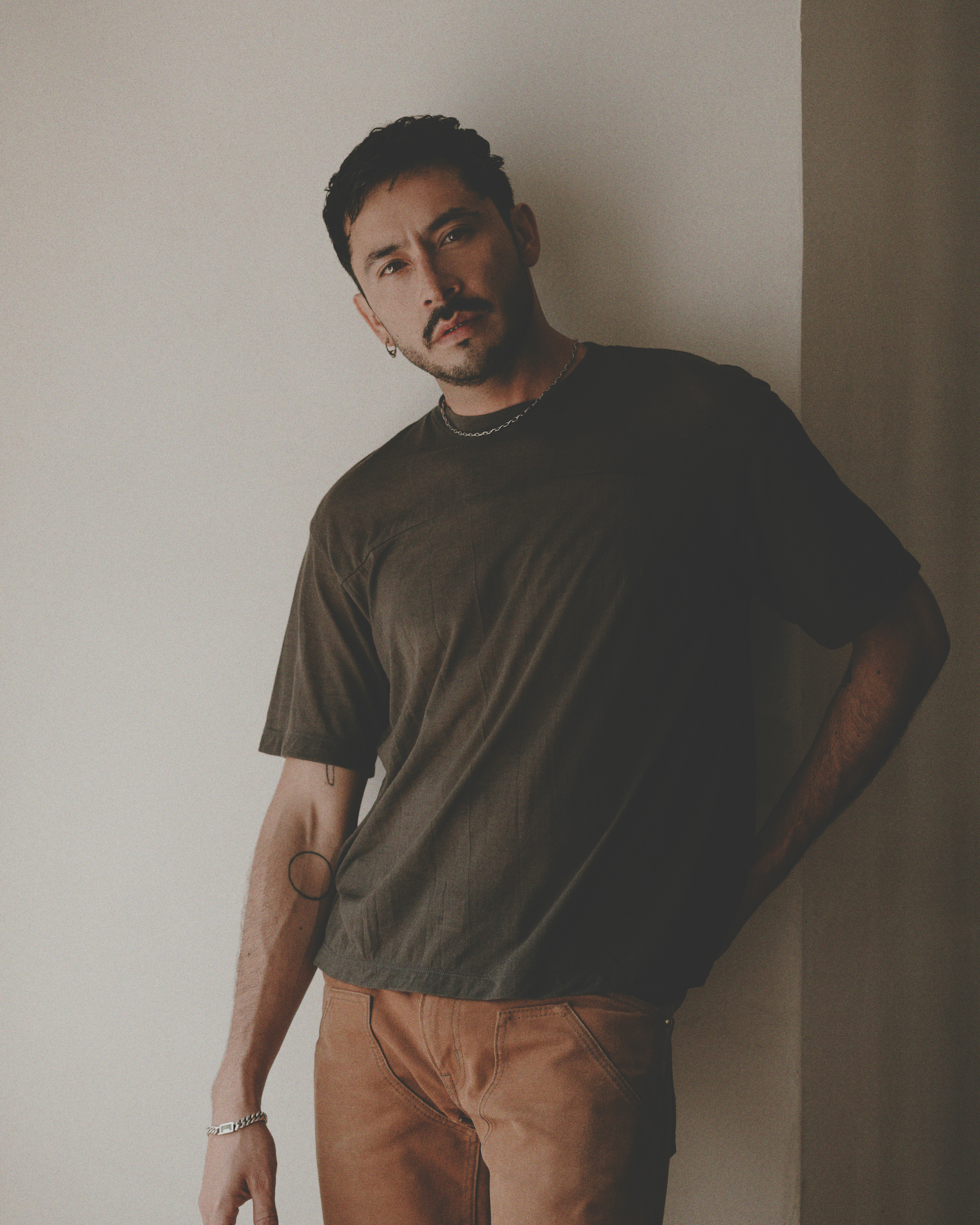
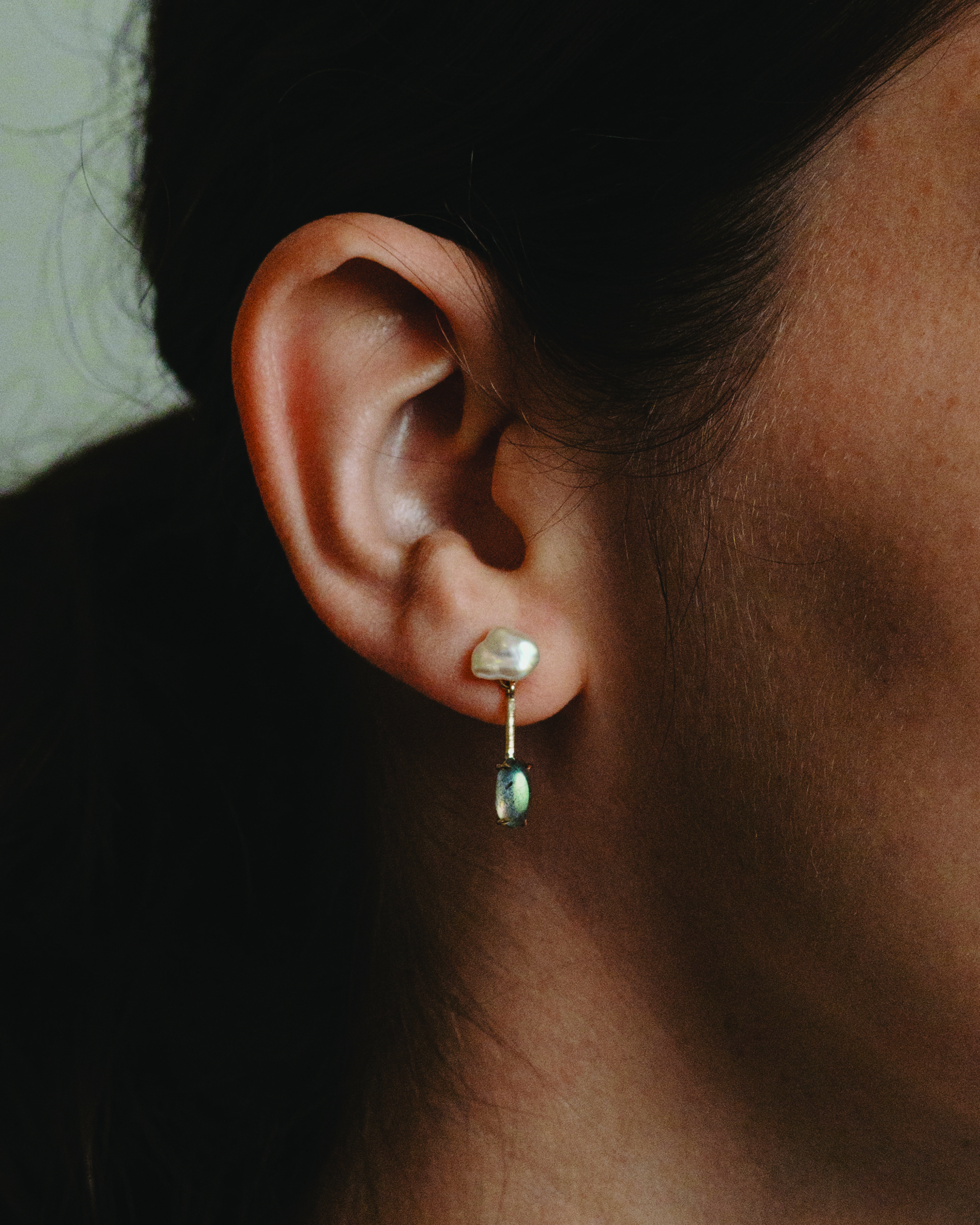
Each piece, from pearl-encrusted cuffs to sculptural signet rings, is a handcrafted collaboration between Changpo and master artisans, some of whom have worked alongside his family’s Mexico City atelier for more than 75 years. His design process is “slow and deeply personal,” and always a reflection of his heritage. “There’s an ancestral connection between metal, stone, and body adornment that I try to honor,” he says. “Each piece is a quiet tribute to that legacy, crafted for a global audience.”
In Changpo’s hands, silver and gold are more than materials. When crafted, they become a form of storytelling. He sees each object as a dialogue between himself, the material, and the wearer. Beyond design, he is invested in sustaining the craft itself, mentoring young artisans and preserving techniques passed down through generations. studio-vrn.com; varonofficial.com

Ana López
In the mountains of Jalisco, Ana López distills more than agave—she distills heritage. Her raicilla brand, La Reina, is both a tribute to her homeland and a celebration of her native Mexican region.
Raicilla is made from the maximiliana, known locally as the “queen of agaves,” a species of agave that grows among pine trees, thriving only where sunlight filters gently through the forest canopy. “We call them agaves amigos del bosque—agaves that live in harmony with the forest,” López says. “What this land gives cannot be replicated elsewhere.” In that symbiosis between plant and mountain, she sees the essence of Jalisco itself: adaptable, generous, and deeply rooted in Indigenous tradition.
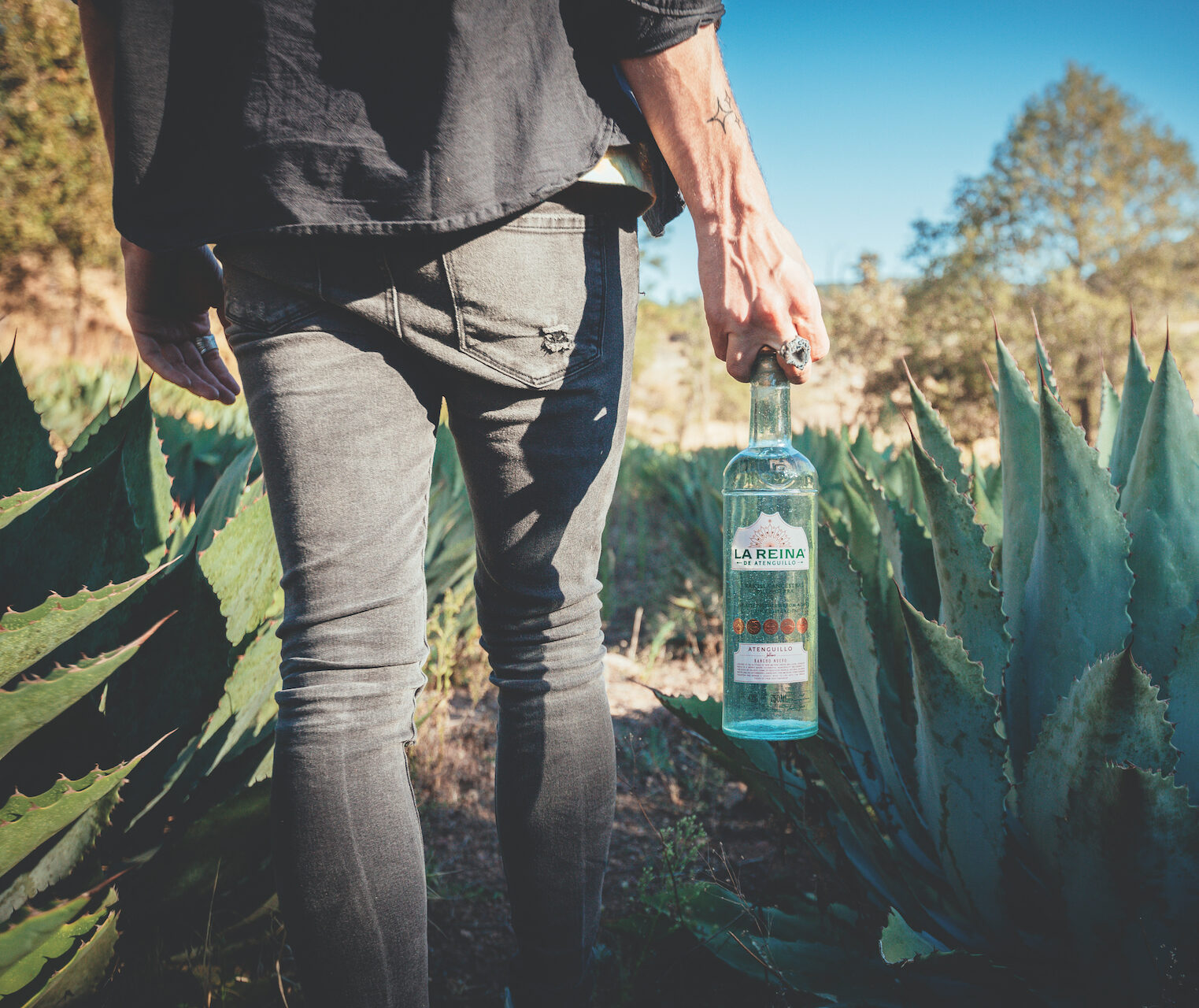
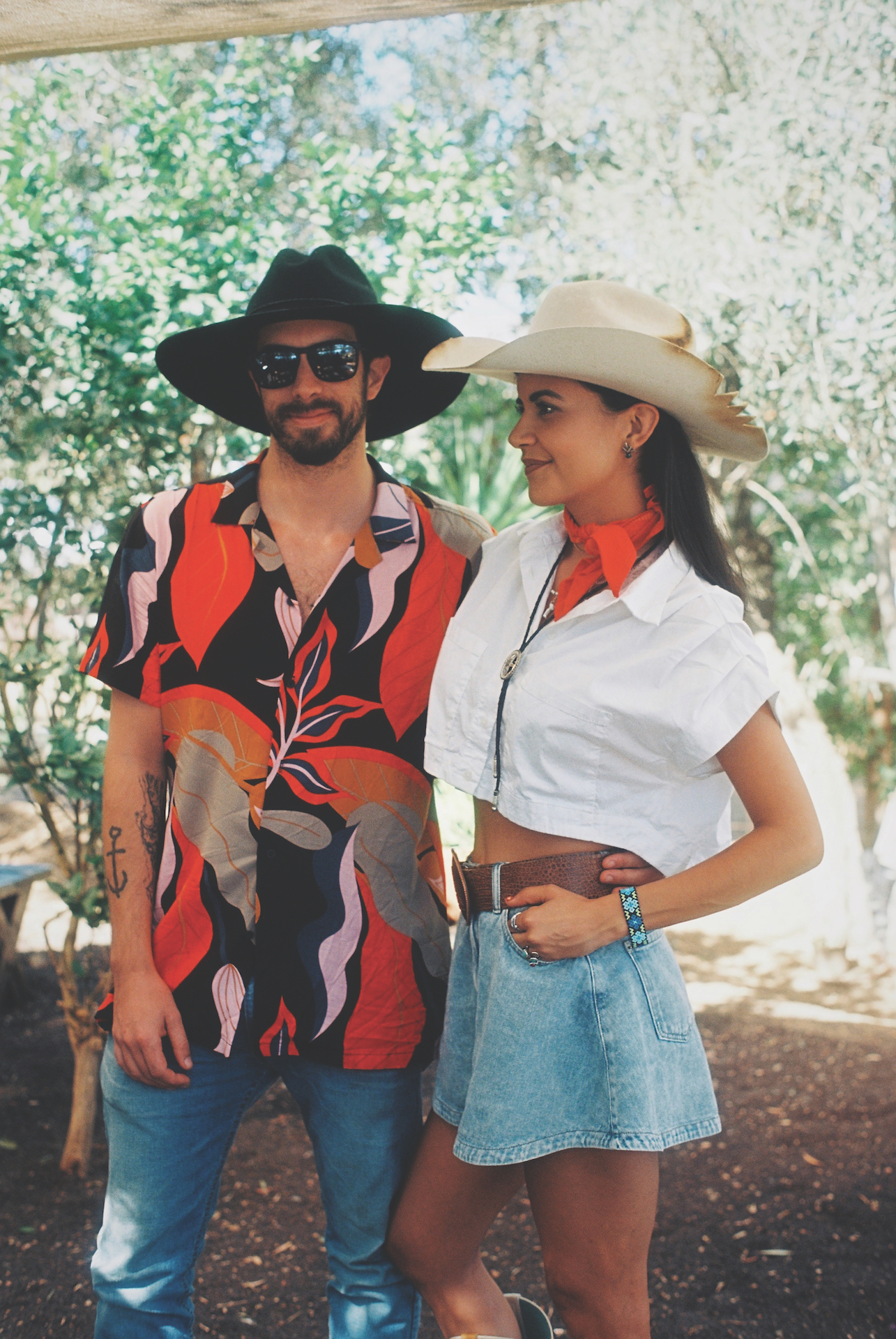
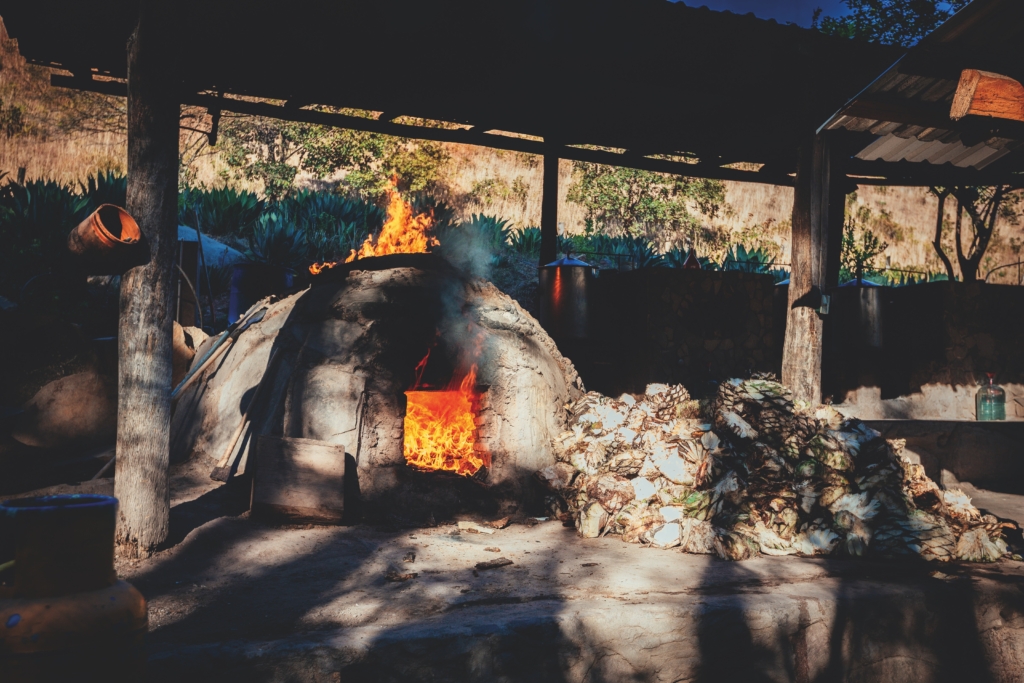
López, along with her partner, Juan Pablo Mercado, honor those roots by preserving ancestral production methods, crafting every batch by hand and without the use of electricity. While the spirit of La Reina is unadulterated by modernity, the bottles in which her raicilla comes are modern creations, forged with local artists, who craft each glass bottle by hand. Drinking vessels and labels are another chance to collaborate with artisans, such as Jalisco’s Tierra Ámbar, who recently created a limited-edition ceramic bottle for López. At its heart, every element is intended to celebrate the spirit of Jalisco.
For López, La Reina is an opportunity to introduce the world to raicilla, a spirit she believes has its own soul and purpose, independent of its better-known agave-made counterparts, tequila and mezcal. “Tequila is euphoric, a party spirit; mezcal is mystical; raicilla opens creativity,” she says. Each distillation carries something profound. “The Maximiliana, transformed into raicilla, reminds us that life is a transformation guided by patience, fire, and love.” drinklareina.com
Ernesto Azcárate
For Mexico City–based furniture designer Ernesto Azcárate, every piece comes to life through an abundance of curiosity. “Creation begins with surprise,” he says, “a surprise that can emerge through the process itself.” Trained as an architect and deeply influenced by his surroundings, Azcárate taps equally into craft and contemplation to
make his sculptural tables, chairs, and built objects.
Mexico City’s dual nature—its ancient foundations and modern pulse—is a special inspiration, whether the designer is working in solid wood or recinto volcánico, a porous volcanic stone native to the region. Looking to his native city as his muse, he translates physical landscapes into beautiful objects. “Recinto volcánico shapes much of the city’s identity,” he says. “You see it in streets, facades, and ancient ruins. It carries a memory of the city’s origin, and I like to bring that presence into my pieces.”
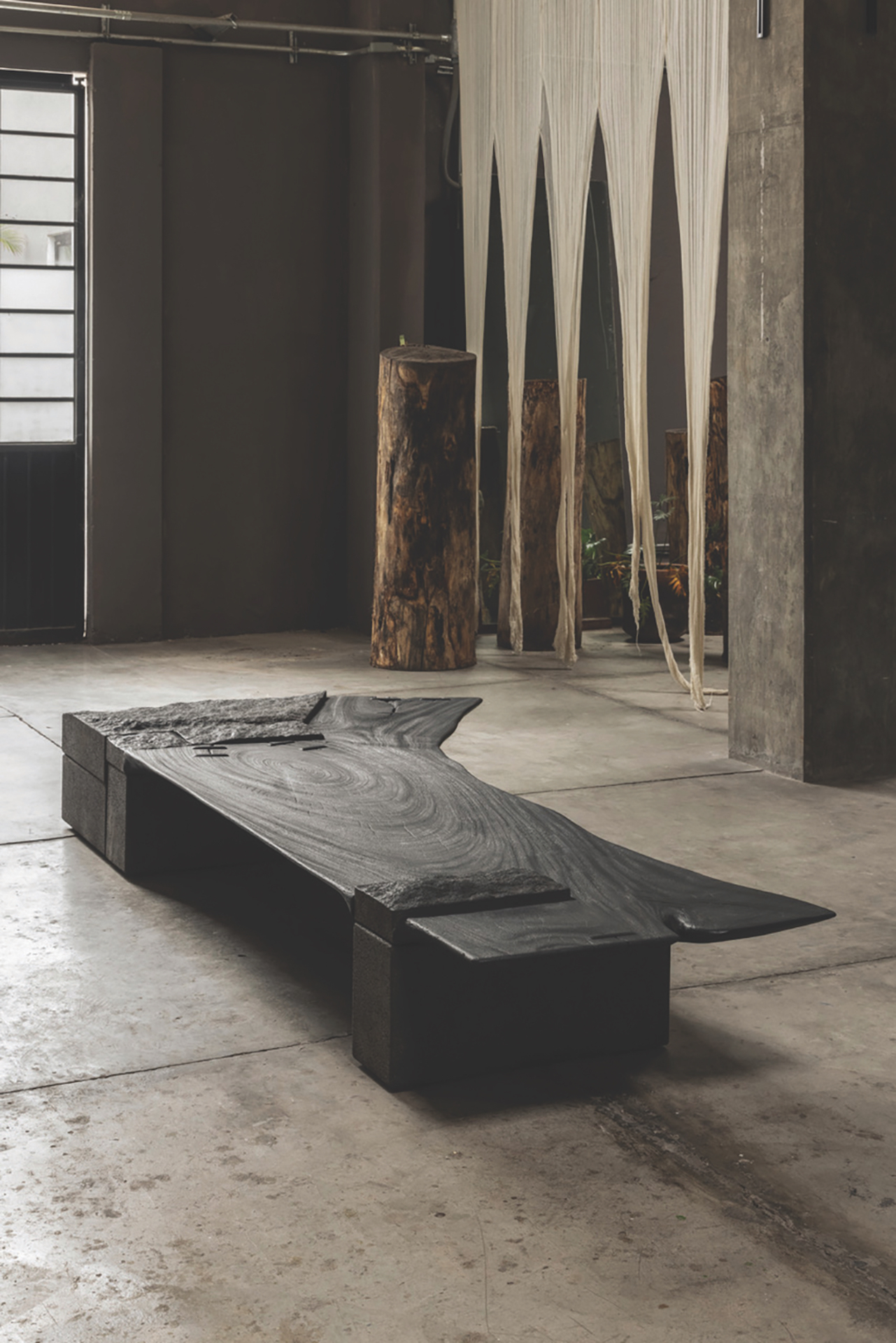
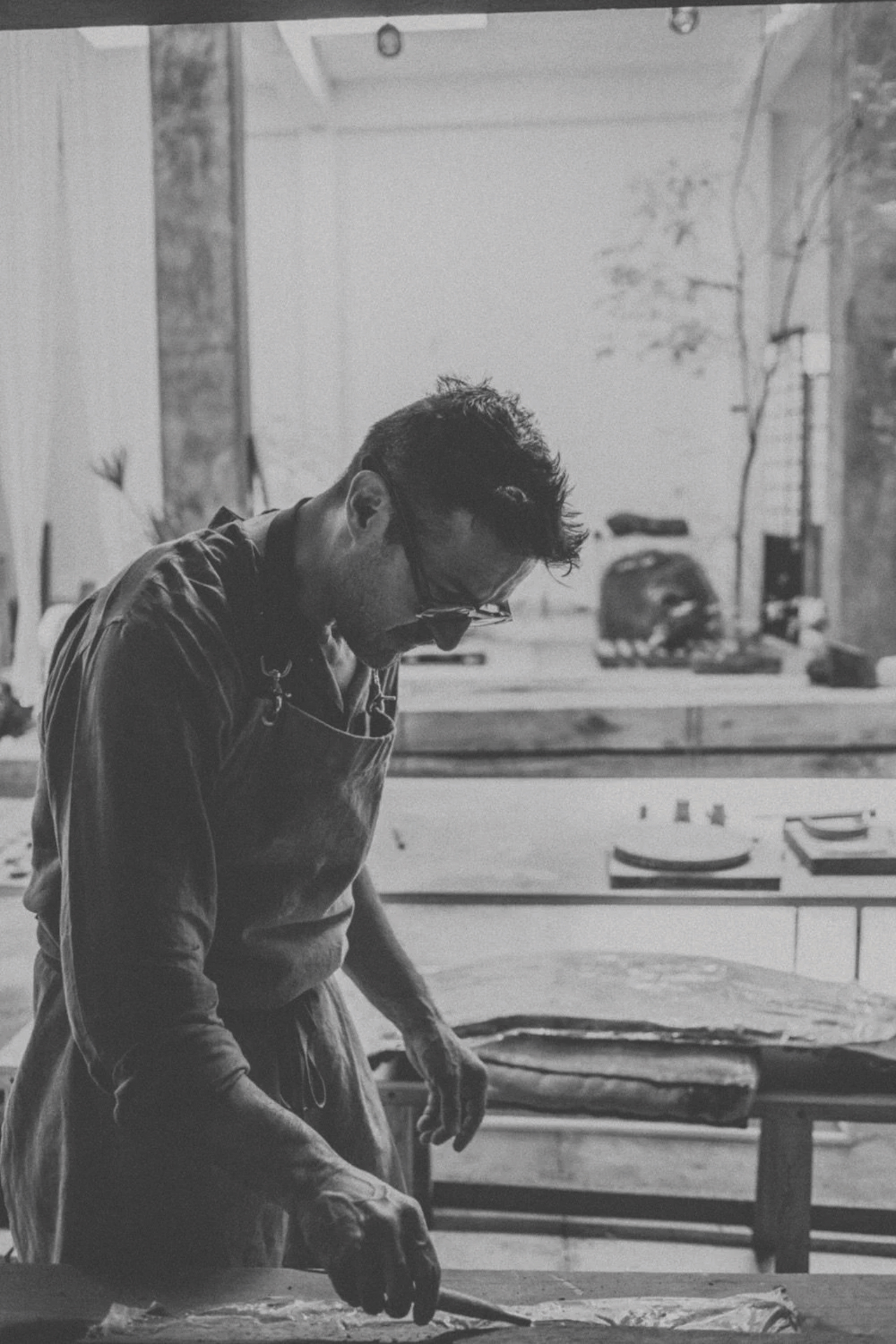
Azcárate’s practice isn’t about literal representation, but resonance. Wood and stone appear as quiet gestures—textures in dialogue, balancing fragility and permanence. After two decades of woodworking, Azcárate says that limiting his tools and materials has paradoxically expanded his freedom. The constraint, he says, deepens his relationship with the medium and heightens his sense of expression. The results lie somewhere between architecture and poetry: functional forms imbued with philosophy. “Creation is the search for something that can give meaning to life,” he says, “something that resonates beyond intention.”