

By Betsy Andrews | Photography by Michael Schalk
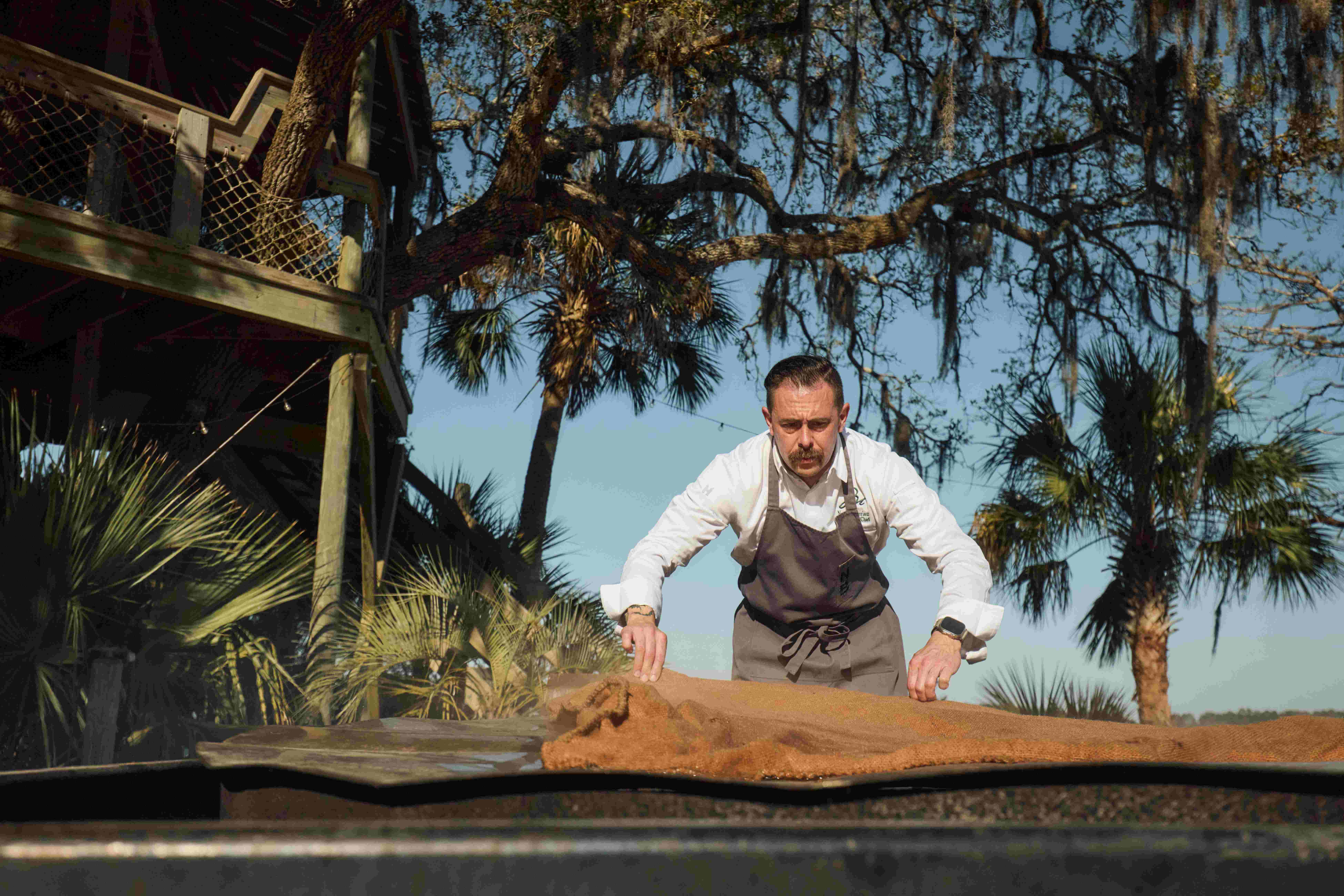
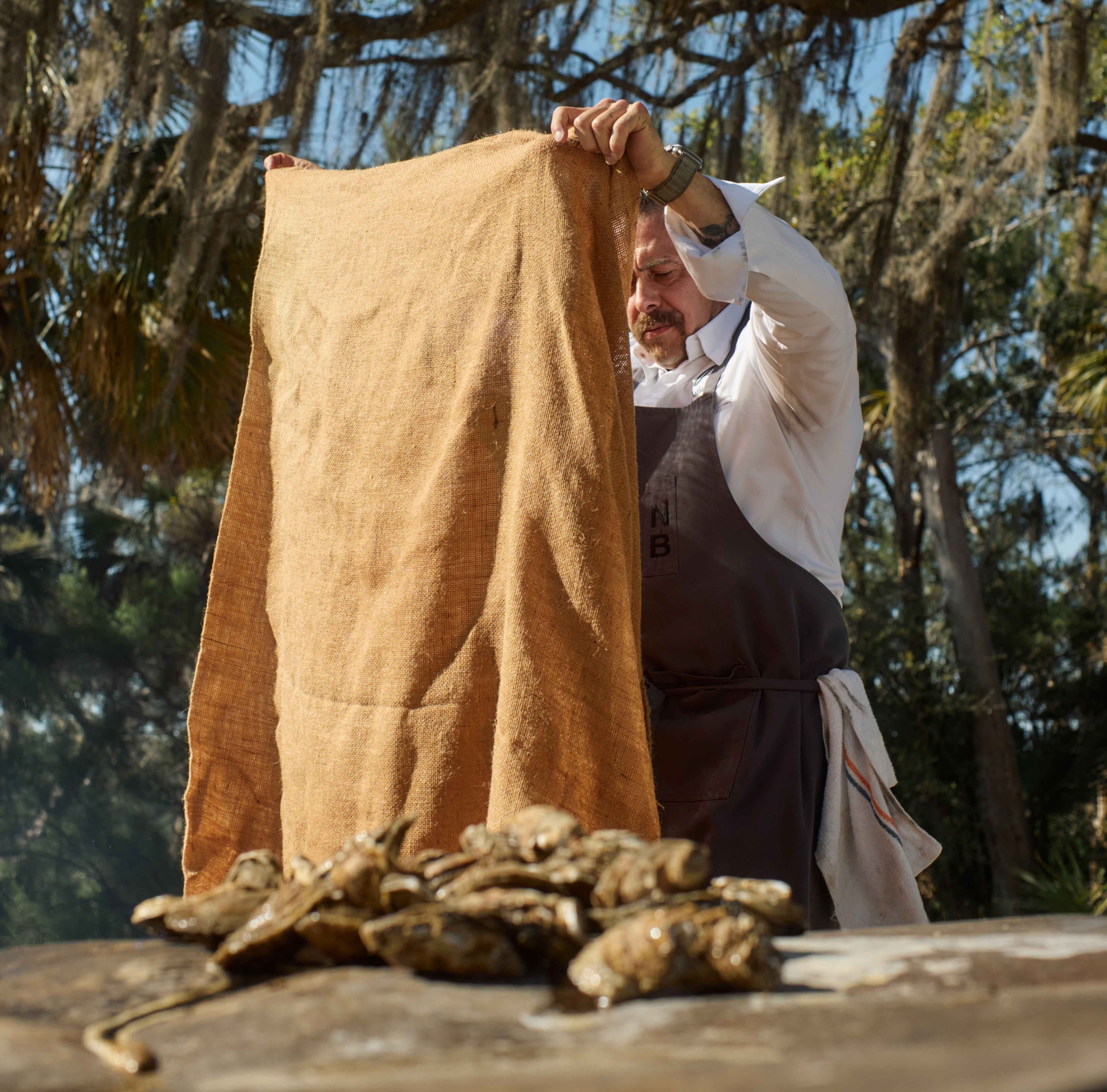
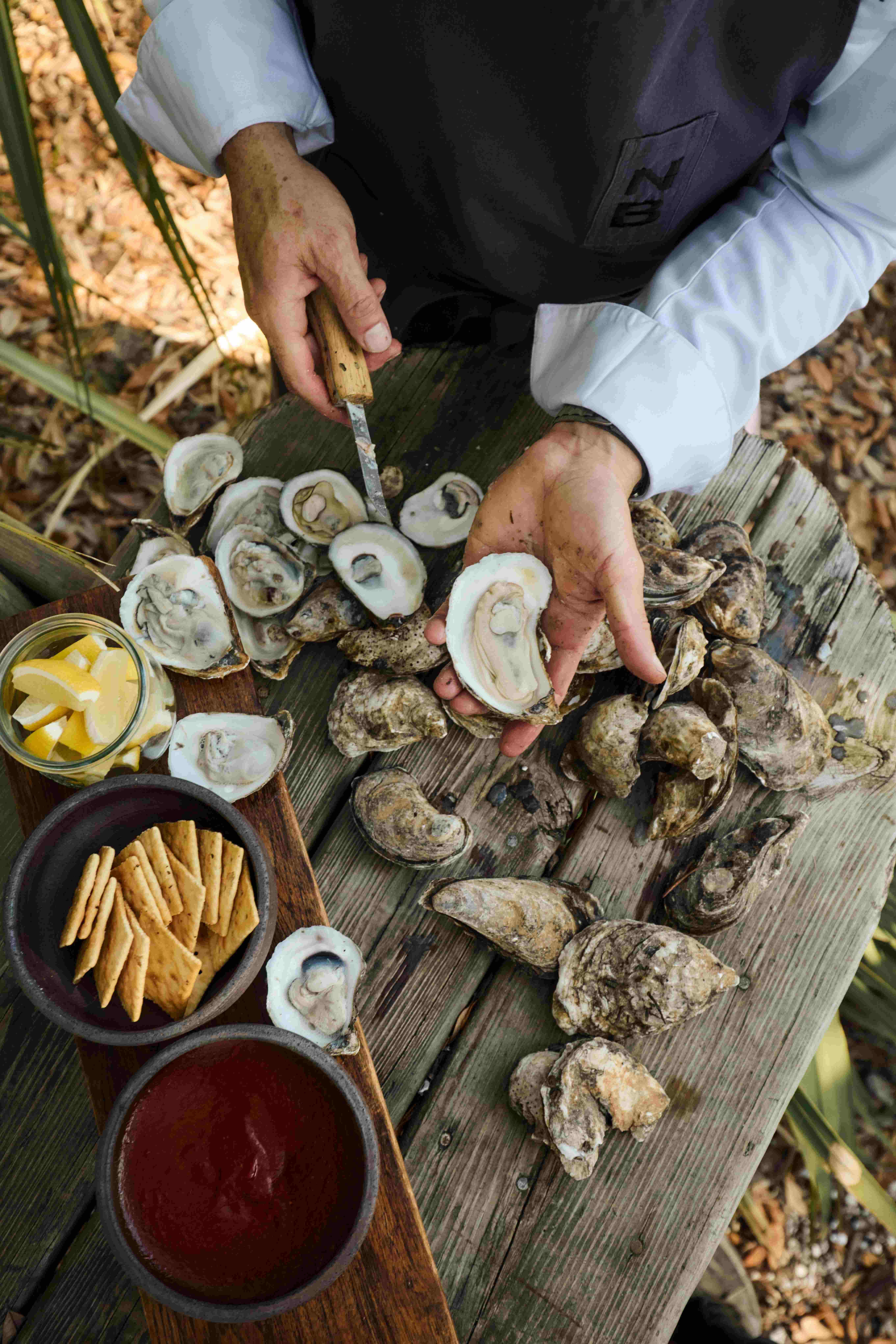
Smoke slowly drifts into the Lowcountry evening as burlap-covered oysters steam over an open fire along the banks of the May River. Hours earlier, these juicy bivalves were iced and tagged from nearby waters; in minutes, they’ll be piled onto a communal table at Montage Palmetto Bluff’s Moreland oyster roast, where guests will gather along the banks of Cauley’s Creek, and clink the shells under string lights, cocktails in hand.
South Carolina Oysters
Nathan Beriau, the resort’s executive chef, has been slurping oysters since his childhood in Portland, Maine—a mecca for the New England variety. He later got his fill of bigger, creamier West Coast oysters as a rising young chef in San Francisco. But it wasn’t until he arrived in South Carolina, at Montage Palmetto Bluff, that he began to roast the salty delicacies—a beloved Lowcountry practice that has opened his palate to a whole new world of half-shell flavor. “The wood smoke mingling with that briny essence is beautiful,” he says.
The History of the Lowcountry Oyster Roast
Oyster roasts have a rich history in this part of the country: The heritage stretches from the Gullah descendants of West Africa to traditions dating back five millennia among Native Americans, who left shell middens as evidence of their feasts. Today, the culinary practice has become a top request—and a culinary signature—at Montage Palmetto Bluff. It’s a relaxed, open-air affair, where South Carolina oysters are draped on butter-baked saltines, along with spoonfuls of Beriau’s signature peppery cocktail sauce. “We keep it as traditional as possible,” he says. His team spreads the oysters atop a big, steel plate set over a roaring firepit for two minutes to allow the mollusks to open before they hit the table. The fixings are minimal so the oysters can shine.
How the Oysters Are Grown
Thus, only the freshest oysters will do. Trey McMillan of Lowcountry Oyster Company grows bivalves in the pristine Ashepoo, Combahee, and Edisto (ACE) Basin, one of the largest undeveloped estuaries on the Atlantic coast. McMillan’s oysters, Beriau says, are “clean and petite, with a deep cup that allows them to develop full-bellied flesh for better eating.”
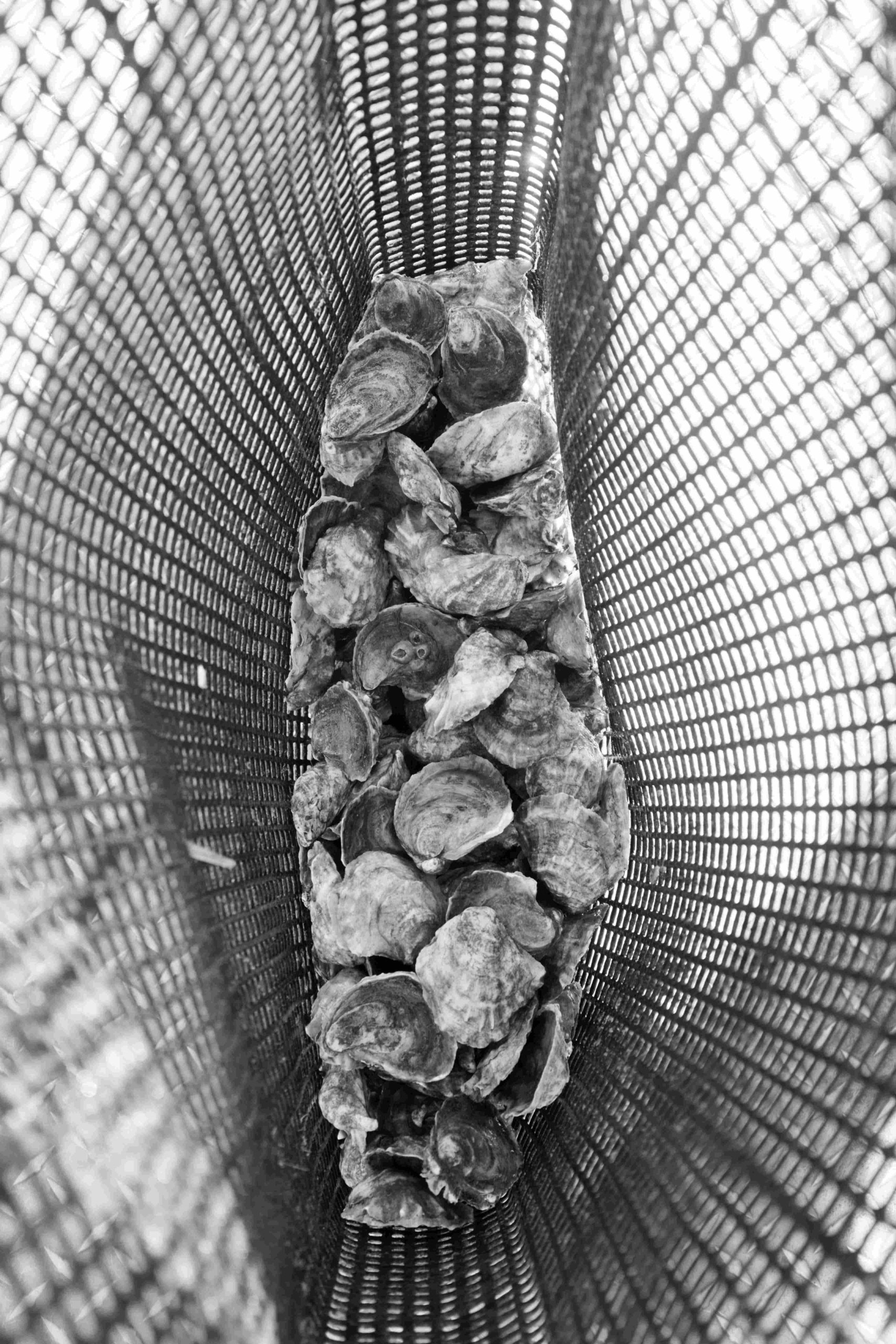
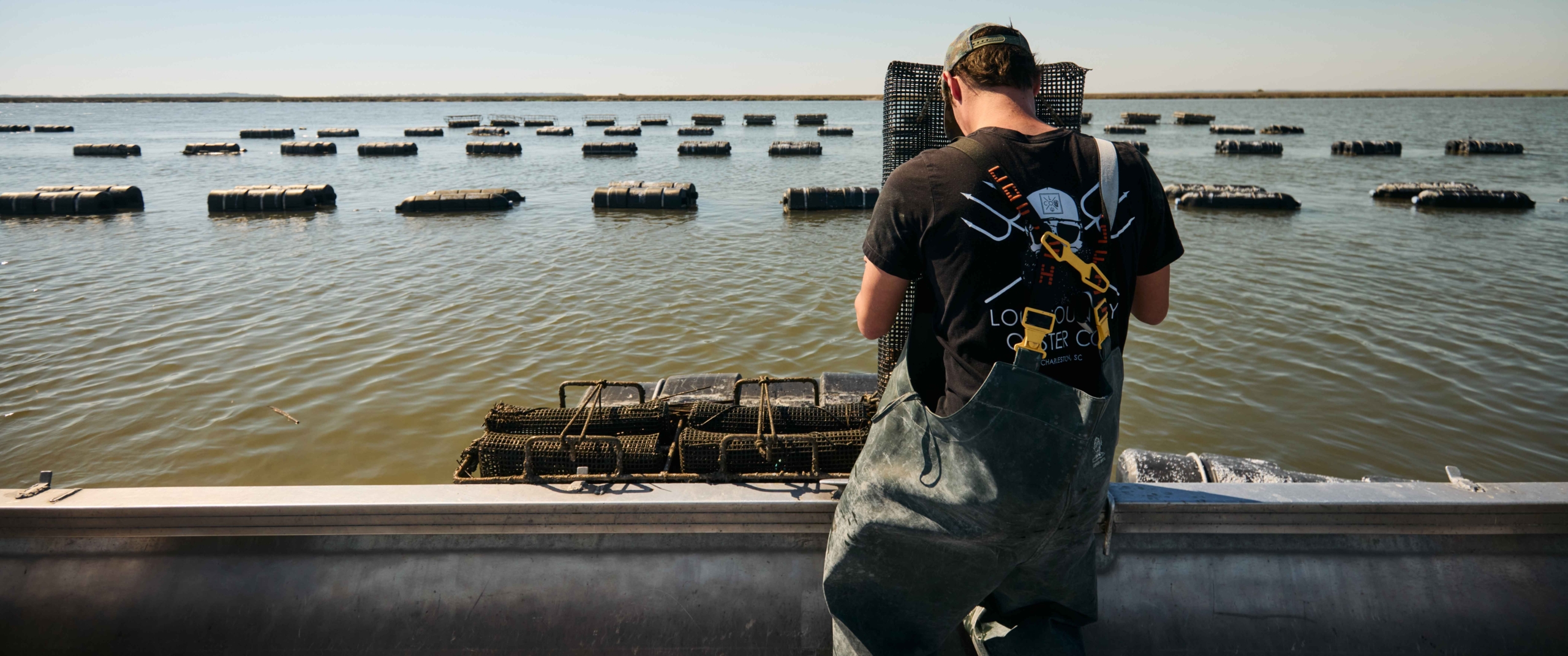
Their size is on account of the way they are farmed. In the wild, oysters adhere together, their shells growing long, flat, and sharp against one another. Locals call them “blades,” and the oyster roast is an efficient way to cook whole clusters of blades. But McMillan farms oysters as individuals, purchasing them from hatcheries as tiny “seeds” and raising them in a nursery until they’re pinkie-nail-sized. Then he moves them to floating cages in the estuary. “We typically have 5 million to 7 million oysters on the farm at different sizes,” McMillan says. “Some grow faster, some slower, and we want to keep like sizes together, so they grow more consistently.”
Sustainable Oyster Farming in the ACE Basin
McMillan’s team pulls the Lowcountry oysters from the water half a dozen times over their two-year lifespan, passing them through a tumbling grader that sorts and polishes them, strengthening their shells, so the oysters grow deep cups. It helps that the mollusks are bred not to spawn. “They stay good and meaty throughout the year,” he says.
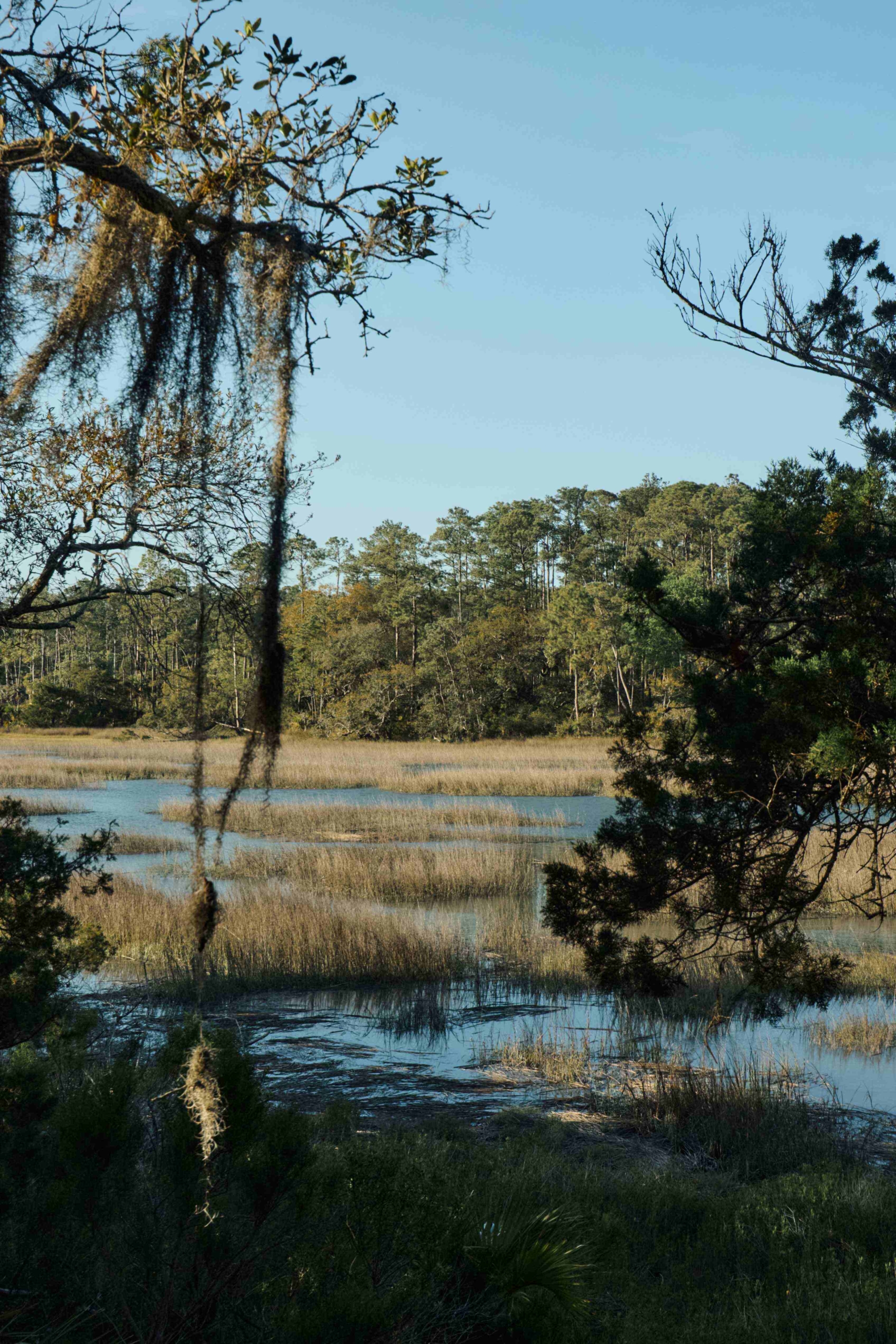
The ACE Basin, where the oysters are raised, comprises 350,000 acres of protected wetlands with a seven-and-a-half-foot tide that flushes the farm clean two times a day. “There’s no development around us, no power plants or factories, nothing to compromise the pureness of water,” McMillan says. The result is “a super brackish oyster that’s clean and crisp with an almost olive brine finish.”
From Farm to Fire at Montage Palmetto Bluff
When those beauties hit the table at a Montage Palmetto Bluff oyster roast, the May River is a reminder of the system behind them. The distance between farm and fire is intentionally short, and that closeness carries through in flavor, consistency, and sustainability. Sourcing isn’t a supporting detail here; it is the backbone of a long-beloved tradition. At Montage Palmetto Bluff, the Lowcountry oyster roast connects sustainable oyster farming, local waters, open-fire cooking and a culinary tradition shaped over generations.